
Symptoms of High Blood Pressure: Signs and When to Get Help
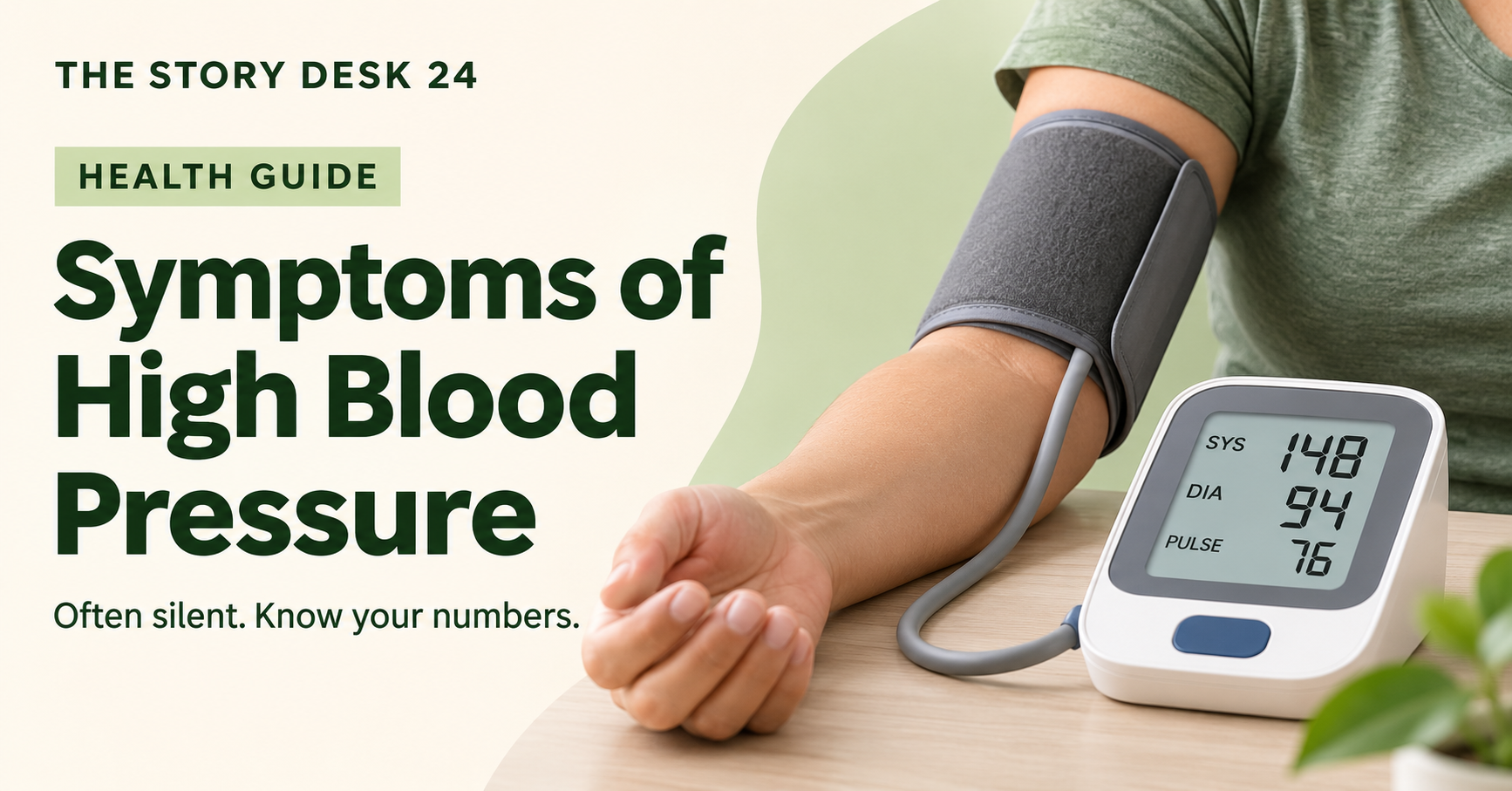
High blood pressure usually has no symptoms. You can feel healthy and still have hypertension, so checking your blood pressure matters more than relying on how you feel.
Severe headaches, chest pain, breathing difficulties and changes in vision can occur when blood pressure becomes very high. However, symptoms alone cannot confirm a diagnosis, and even dangerous readings may occur without obvious warning signs.
What Is High Blood Pressure?
Blood pressure describes the force of blood against your artery walls. High blood pressure, also called hypertension, means this pressure remains too high over time.
A blood pressure reading contains two numbers, measured in millimetres of mercury, or mm Hg:
- Systolic pressure: The top number, measured when your heart beats.
- Diastolic pressure: The bottom number, measured while your heart relaxes between beats.
For example, in a reading of 145/92 mm Hg, 145 is the systolic pressure and 92 is the diastolic pressure. Either number can be high.
Persistent hypertension puts extra strain on your blood vessels and organs. Without treatment, it increases the risk of heart attack, stroke, heart failure, kidney disease and eye damage.
Are There Early Symptoms of High Blood Pressure?
There are usually no reliable early symptoms of high blood pressure. Many people discover hypertension during a routine check rather than because they feel unwell.
This is why hypertension is often described as a silent condition. It can develop gradually and remain unnoticed for years.
This is why hypertension is often described as a silent condition. It can develop gradually and remain unnoticed for years.
If you are concerned, arrange a blood pressure check and ask a healthcare professional to interpret the results. Do not wait for a particular symptom before getting checked.
Symptoms That Can Occur With Very High Blood Pressure
The following symptoms may occur with severe hypertension or its complications. They are not a checklist for diagnosing ordinary high blood pressure.
Several can also signal another serious illness and need assessment regardless of your blood pressure reading.
| Possible symptom | What to know |
|---|---|
| Severe headache | A new, sudden or unusually severe headache needs urgent assessment. |
| Blurred vision or other vision changes | Sudden changes are particularly concerning. |
| Chest pain | This can signal a heart problem and should not be dismissed. |
| Shortness of breath | New or severe breathing difficulty needs emergency help. |
| Confusion | Sudden confusion may indicate a medical emergency. |
| Weakness, numbness or trouble speaking | Sudden symptoms can be signs of a stroke. |
| Nausea or vomiting | These can occur with very high pressure but have many other causes. |
| Dizziness | This is not a reliable indicator of hypertension by itself. |
Nosebleeds, anxiety, ringing in the ears and an abnormal heartbeat are also reported with very high blood pressure. Their presence does not establish the cause, and their absence does not mean your blood pressure is safe.
When Does High Blood Pressure Need Urgent Help?
For adults who are not pregnant, a systolic reading around 180 or higher, or a diastolic reading around 120 or higher, needs urgent attention. Both numbers do not have to be high.
If serious symptoms are present
Call your local emergency number immediately. Chest pain, breathing difficulty, sudden weakness, trouble speaking, severe back pain or new vision changes may signal a hypertensive emergency.
Do not wait for your blood pressure to fall on its own.
If you have no symptoms
Stay seated, wait at least one minute and repeat the measurement. If it remains very high, contact a healthcare professional immediately for guidance.
Do not take extra blood pressure medication unless a clinician directs you to.
The American Heart Association’s guidance on severe hypertension and emergencies explains when emergency care is needed.
Sudden chest pain, stroke symptoms or severe breathlessness also need emergency help when you do not know your blood pressure.
What Blood Pressure Numbers Mean
These are the American Heart Association’s categories for adults who are not pregnant:
| Category | Systolic: top number | Relationship | Diastolic: bottom number |
|---|---|---|---|
| Normal | Below 120 | AND | Below 80 |
| Elevated | 120–129 | AND | Below 80 |
| Stage 1 hypertension | 130–139 | OR | 80–89 |
| Stage 2 hypertension | 140 or higher | OR | 90 or higher |
All numbers are in mm Hg.
When the numbers fall into different categories, the higher category applies. For example, 135/92 is in the stage 2 range because the bottom number is above 90.
Diagnostic thresholds vary between guidelines and settings. The NHS generally uses 140/90 or higher in a clinic and 135/85 or higher at home.
A healthcare professional usually confirms hypertension using repeated measurements, home averages or a 24-hour monitor. One reading alone does not usually establish the diagnosis..
How to Check Your Blood Pressure at Home
Use a validated automatic upper-arm monitor with a correctly sized cuff. Ask a healthcare professional to check your technique and the device’s accuracy.
For a routine measurement:
- Prepare beforehand: Avoid smoking, caffeine and exercise for 30 minutes.
- Empty your bladder: Then rest quietly for at least five minutes.
- Sit correctly: Support your back, keep your feet flat and avoid crossing your legs.
- Position your arm: Place the cuff on bare skin and support your arm at heart level.
- Stay quiet: Avoid talking or moving during the measurement.
- Repeat and record: Take two readings one minute apart and write down both results.
- Measure at consistent times according to your clinician’s instructions. A record of readings gives a more useful picture than an isolated result.
- See the American Heart Association’s home blood pressure monitoring guide for additional instructions.
- Home monitoring supports regular medical care; it does not replace it.
High Blood Pressure in Women and During Pregnancy
Women and men can both have hypertension without symptoms. Outside pregnancy, there is no separate universal emergency threshold simply because someone is a woman.
Pregnancy and the period after childbirth require different advice.
A systolic reading of 160 or higher, or a diastolic reading of 110 or higher, is severe and requires immediate medical assessment. Do not wait for the usual adult crisis threshold.
Warning signs of preeclampsia include:
- A headache that does not go away.
- Blurred vision, seeing spots or other vision changes.
- Pain in the upper abdomen.
- Swelling of the face or hands.
- Nausea or vomiting.
- Trouble breathing.
Contact your maternity team urgently if these develop. Severe symptoms need emergency care.
Preeclampsia can also develop after delivery, including in someone who did not have it during pregnancy. Regular prenatal and postnatal checks matter because some people have no symptoms.
What Causes High Blood Pressure in Young Adults?
Young adults can develop hypertension too. Contributing factors include family history, excess weight, a high-salt diet, low physical activity, excess alcohol and poor-quality sleep.
Sometimes an underlying condition or medicine contributes. Examples include:
- Kidney disease.
- Obstructive sleep apnea.
- Thyroid problems.
- Some decongestants.
- Hormonal birth control.
- Certain pain medicines.
If repeated readings are high, arrange a medical assessment rather than assuming your age protects you.
Discuss prescription medicines, over-the-counter products and supplements with your clinician. Do not stop a prescribed medicine on your own.
How to Lower High Blood Pressure Safely
Long-term control usually involves changes to daily habits, prescribed medicine when needed, and follow-up measurements.
Useful steps include:
- Follow a DASH-style eating plan: Include vegetables, fruit, whole grains and other heart-healthy foods.
- Reduce sodium: Check packaged-food labels and limit heavily salted foods.
- Be physically active: Ask your clinician what level of activity is appropriate for you.
- Work toward a healthy weight: A sustainable plan can help if you have excess weight.
- Avoid tobacco and limit or avoid alcohol.
- Support healthy sleep and manage stress.
- Take medication as prescribed: Discuss side effects or treatment concerns with your healthcare team.
These measures support ongoing control. They should not delay assessment of a very high reading or serious symptoms.
Frequently Asked Questions
What are the top 10 symptoms of high blood pressure?
There is no reliable set of 10 symptoms that identifies hypertension. The same applies to lists of five, six or eight signs: most people have none.
Symptoms associated with very high readings include severe headache, vision changes, chest pain, breathing difficulty and confusion. Measure your blood pressure rather than relying on a symptom count.
How do you feel when blood pressure is very high?
You may feel completely normal. Some people develop a severe headache, nausea, breathlessness or other warning signs. How you feel cannot tell you the reading or whether organs are being affected.
Can you cure high blood pressure in three minutes?
No three-minute home method reliably cures hypertension. Rest may change an individual reading, but it does not establish lasting control.
Ongoing management depends on the cause, your health and a treatment plan. A suspected hypertensive emergency needs medical care.
What reduces high blood pressure immediately?
There is no single home remedy that safely treats every sudden spike. If you have no serious symptoms, repeat the measurement correctly and follow the urgent-care advice in this article.
Emergency treatment and the rate of pressure reduction should be decided by healthcare professionals.
How long before high blood pressure causes damage?
There is no fixed safe waiting period. Uncontrolled hypertension can damage organs over time without symptoms, while a hypertensive emergency can cause acute harm.
Risk depends on the severity, duration and your overall health.
Can high blood pressure go away?
It can often be controlled, and some cases improve when an underlying cause is treated. Others require long-term treatment.
Keep monitoring and discuss any medication changes with your clinician, even when your readings improve.
Sources
- American Heart Association · Signs and symptoms of high blood pressure
- World Health Organization · Hypertension
- American Heart Association · When to call 911 about high blood pressure
- American Heart Association · Understanding blood pressure readings
- NHS · High blood pressure
- American Heart Association · Home blood pressure monitoring
- CDC · High blood pressure during pregnancy
- NHLBI, NIH · Causes and risk factors
- NHLBI, NIH · Treatment for high blood pressure
- NHLBI, NIH · Symptoms of high blood pressure
- Mayo Clinic · High blood pressure: Symptoms and causes