
Best Eye Drops for Dry Eyes: How to Choose the Right One

Burning, gritty, tired eyes are some of the most common complaints in today’s screen-heavy world. Dry eye can come from long hours on a phone or computer, air conditioning, dry or windy weather, contact lens use, aging, hormonal changes, certain medicines, and medical conditions. For many people, lubricating eye drops (also called artificial tears) are the first and simplest form of relief.
There is no single best eye drop for everyone. The right one depends on what is causing your dryness, how severe it is, and how often you need to use drops. This article explains the main types, what to look for on the label, and when to move beyond over-the-counter options.
What Are Artificial Tears?
Artificial tears are lubricating drops that add moisture to the surface of the eye and support the natural tear film. A healthy tear film has three layers: an oily outer layer that slows evaporation, a watery middle layer, and a mucus layer that helps tears spread evenly. Different drops are designed to support different parts of this system.
Main Types of Over-the-Counter Dry Eye Drops
Standard lubricating drops:
These are the most common and are suitable for mild, occasional dryness. Typical active ingredients include:
- Carboxymethylcellulose (CMC): a widely used lubricant that holds moisture on the eye’s surface.
- Hydroxypropyl methylcellulose (HPMC) and hypromellose: similar lubricants that add thickness and comfort.
- Glycerin: helps retain moisture and soothe irritation.
- Polyethylene glycol and propylene glycol: common lubricants found in many popular brands.
Hyaluronic acid (sodium hyaluronate) drops:
Hyaluronic acid binds a lot of water and tends to stay on the eye longer than basic drops. Many people find these comfortable for moderate dryness and for long screen days. They are popular in Europe and Asia and increasingly available elsewhere.
Lipid-based or emollient drops:
These contain oils or lipid-like ingredients that support the oily layer of the tear film. They are often helpful for evaporative dry eye, which is commonly linked to blocked oil glands (meibomian gland dysfunction). They can feel slightly thicker and may blur vision briefly after use.
Gels and ointments:
Thicker gel drops last longer than regular drops but can blur vision for a few minutes. Ointments are thicker still and are mainly used at bedtime, because they can blur vision for longer. They suit people with moderate to severe dryness or dry eyes on waking.
Preservative-free drops:
These come in single-use vials or in special multi-dose bottles designed to stay sterile. They are the best choice if you need drops more than about four times a day, have sensitive eyes, or wear contact lenses (check that the product is lens-compatible).
Preserved vs Preservative-Free: Which Is Better?
Multi-dose bottles often contain preservatives to prevent bacterial growth. For occasional use, preserved drops are usually fine. But frequent use can irritate the eye surface and may worsen dryness in sensitive people.
- Use preservative-free drops if you apply drops often, have moderate to severe dry eye, have had eye surgery, or notice stinging with regular bottles.
- Preserved drops are fine for occasional, mild symptoms and are usually cheaper.
How to Choose the Right Drop:
| If you have… | Consider… |
|---|---|
| Mild dryness from screens or air conditioning | Standard lubricating drops |
| Dryness that needs frequent drops | Preservative-free drops |
| Dryness that lasts through the day | Hyaluronic acid or gel drops |
| Burning with watery eyes and oily lid edges | Lipid-based drops (and lid care) |
| Dry, sticky eyes in the morning | Ointment at bedtime |
| Contact lens wear | Drops labeled safe for contact lenses |
Popular Brands to Know:
Many well-known brands make artificial tears across these categories, including Refresh, Systane, Blink, Optive, Thealoz, and Hylo. Availability varies by country, and formulas change over time, so always read the ingredient list and instructions on the package rather than choosing by brand name alone. A pharmacist can help you pick a suitable option.
Examples of Eye Drops, With Product Links:
The table below lists well-known examples from each category, with a link to a manufacturer or pharmacy page for each. These are examples to help you compare options, not a ranking or a guarantee that one will suit you. Availability and formulas differ by country, so check the label and ingredient list on the product you actually buy.
Systane Ultra:
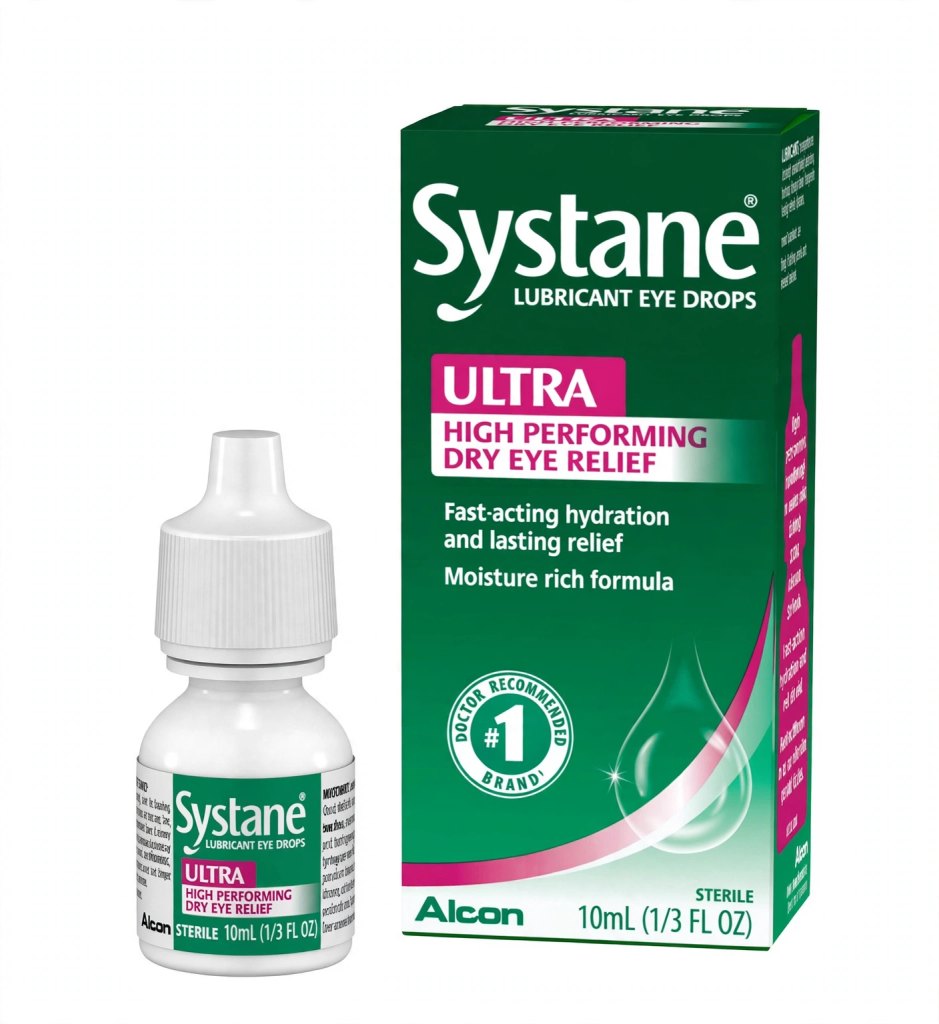
A standard lubricating drop for everyday dryness and screen use. Key ingredients: polyethylene glycol 400 (0.4%) and propylene glycol (0.3%).
Refresh Optive Mega-3 (Vials):
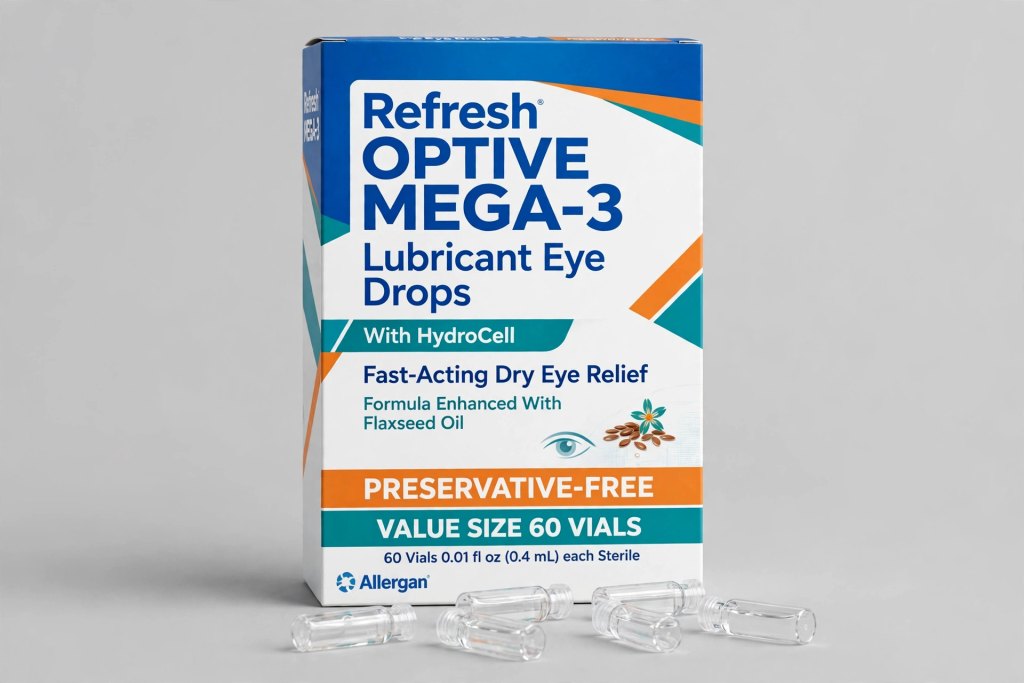
A preservative-free, lipid-supporting drop for dryness linked to oil gland problems. Key ingredients: carboxymethylcellulose (0.5%), glycerin (1%), polysorbate 80 (0.5%), and flaxseed oil.
Hylo-Comod:
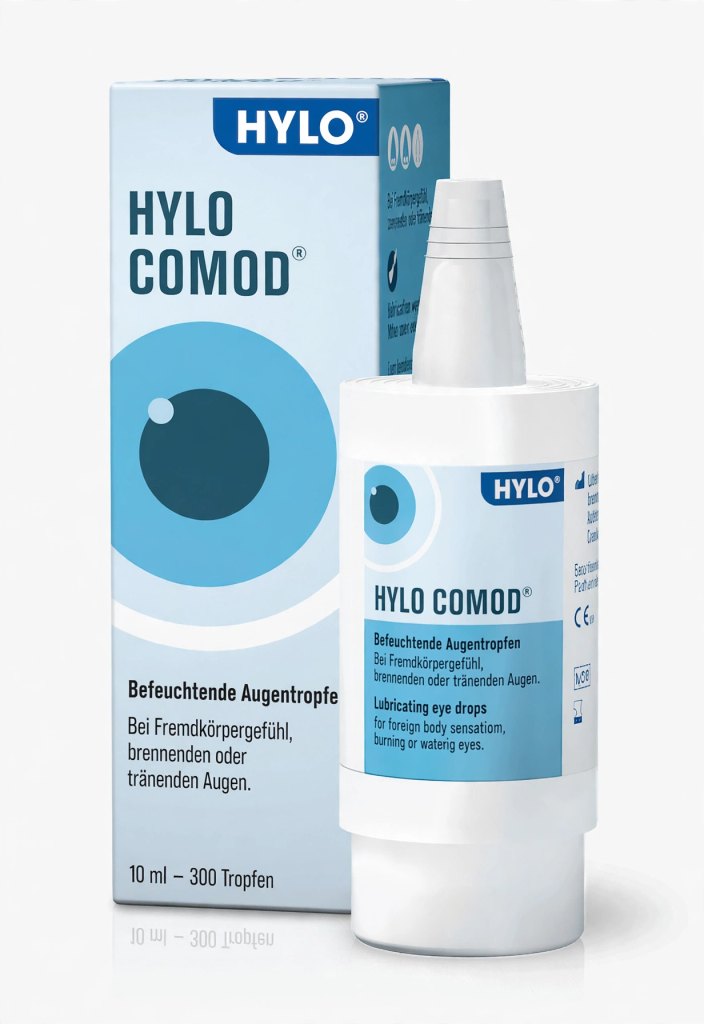
A preservative-free hyaluronic acid drop, suited to frequent and long-term use. Key ingredient: sodium hyaluronate (0.1%).
Ask a pharmacist or eye doctor before switching products if you have an eye condition, have had eye surgery, or wear contact lenses.
Zaditor Antihistamine Eye Drops :
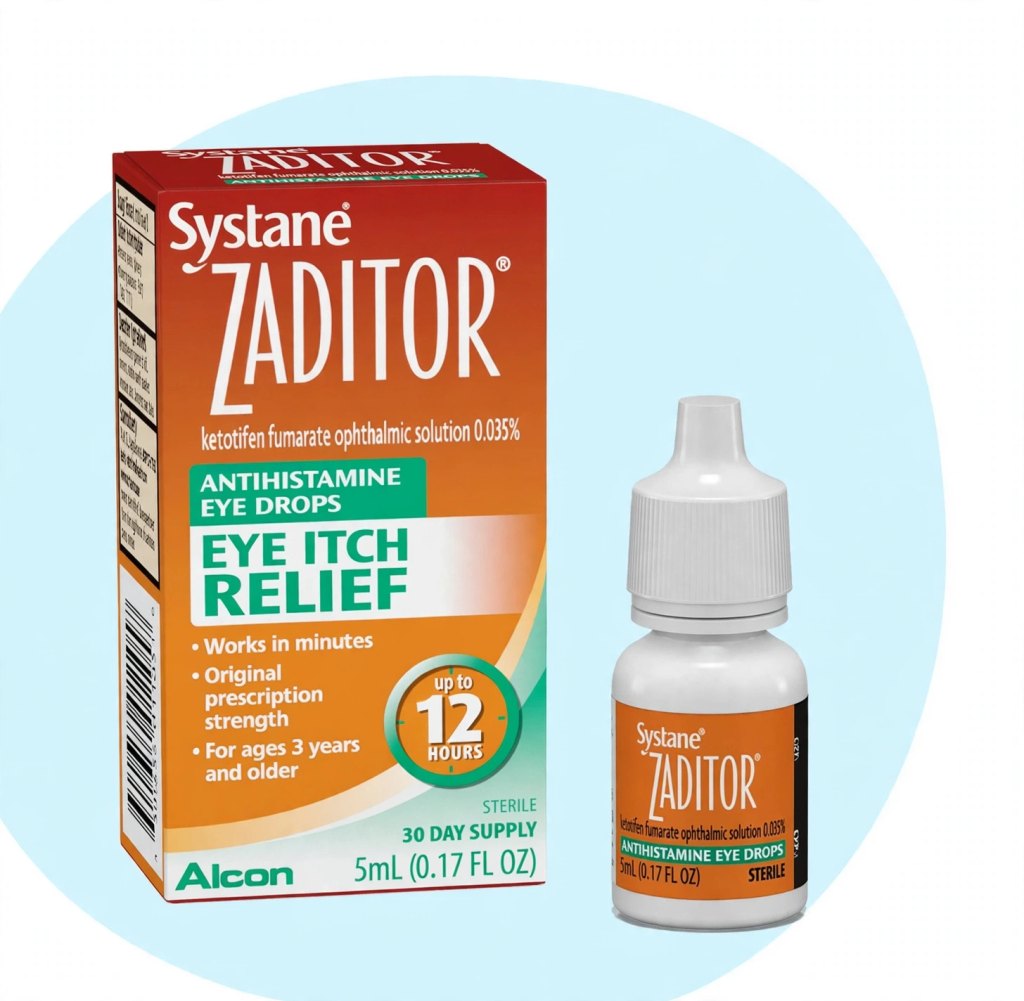
It is designed for itchy eyes caused by allergies rather than dry eyes. They contain ketotifen 0.025% and temporarily relieve itching from pollen, ragweed, grass, and animal hair and dander. The usual dose for adults and children is one drop in the affected eye every 8 to 12 hours, no more than twice a day. If you wear contact lenses, remove them before using the drops and wait at least 10 minutes before putting them back in. Stop use and see a doctor if you have eye pain, vision changes, redness, or itching that lasts more than 72 hours.
Eye Drops to Avoid for Dry Eyes
- “Redness relief” or “get the red out” drops (containing ingredients such as tetrahydrozoline or naphazoline). They shrink blood vessels to reduce redness, are not meant for dryness, and can cause rebound redness and worsen irritation with repeated use.
- Steroid or antibiotic drops used without a prescription. These should only be used under a doctor’s supervision.
- Old or expired bottles, and bottles opened long ago. Check the discard date, since contaminated drops can cause infection.
How to Use Eye Drops Correctly
- Wash your hands first.
- Tilt your head back and gently pull down your lower eyelid to form a small pocket.
- Hold the bottle above the eye without letting the tip touch your eye, lashes, or fingers.
- Squeeze one drop into the pocket. One drop is enough, since the eye can only hold a small amount.
- Close your eyes gently for a minute, and lightly press the inner corner near the nose to keep the drop on the eye longer.
- Wait about 5 minutes before using another type of eye drop, and apply ointments or gels last.
- Recap the bottle right away and do not share it with anyone.
If you wear contact lenses, check the label to see whether you should remove lenses before using the drops.
Beyond Drops: Habits That Help
Drops work best alongside everyday habits:
- Follow the 20-20-20 rule: every 20 minutes, look at something 20 feet away for 20 seconds.
- Blink fully and often, especially while using screens.
- Place screens slightly below eye level so your eyes are not opened as wide.
- Use a humidifier in dry rooms and avoid air blowing directly on your face.
- Wear wraparound sunglasses outdoors in wind and sun.
- Drink enough water and eat foods rich in omega-3 fatty acids, such as fish, walnuts, and flaxseed.
- Apply a warm compress and gently clean the eyelid margins if you have oily or crusty lids.
- Take breaks from contact lenses and follow your eye doctor’s cleaning and replacement advice.
When Drops Are Not Enough
If you need drops several times a day for more than a couple of weeks, or symptoms keep coming back, see an eye doctor. They may suggest:
- Prescription anti-inflammatory drops, such as cyclosporine or lifitegrast
- Treatment for blocked oil glands, such as warm compress devices or in-office procedures
- Punctal plugs, tiny inserts that slow tear drainage
- Treatment of underlying causes, such as allergies, autoimmune conditions, or medicine side effects
When to See a Doctor Promptly
See an eye care professional urgently if you have:
- Severe eye pain or sudden vision changes
- A red, painful eye, especially with light sensitivity or discharge
- Dryness with joint pain, dry mouth, or other body-wide symptoms
- An eye injury or chemical exposure
- Symptoms that continue to worsen despite regular use of drop.
The Bottom Line:
The best eye drop for dry eyes is the one that matches your type of dryness and that you can use comfortably and consistently. For mild screen-related dryness, a simple lubricating drop is usually enough. If you need drops often, choose preservative-free; if your eyes feel dry all day, try a hyaluronic acid or gel formula; and avoid redness-relief drops. If over-the-counter options do not help, an eye doctor can find the cause and offer stronger treatments.
Frequently Asked Questions
What is the best eye drop for dry eyes?
There is no single best drop for everyone. For mild dryness from screens or air conditioning, a simple lubricating drop is usually enough. If you need drops often, preservative-free drops are generally the better choice, and hyaluronic acid or gel drops tend to last longer.
How often can I use artificial tears?
Preserved drops are usually fine a few times a day. If you need drops more than about four times a day, switch to a preservative-free product, which is gentler for frequent use. Always follow the instructions on the package.
Are preservative-free eye drops better?
They are better for people who use drops often, have sensitive eyes, or have moderate to severe dry eye, because preservatives can irritate the eye surface with frequent use. For occasional use, preserved drops are generally fine.
Can I use eye drops with contact lenses?
Only use drops that are labeled safe for contact lenses, and check the package to see whether you should remove your lenses first. If you are unsure, ask your eye doctor or pharmacist.
Can I use redness-relief drops for dry eyes?
It is best not to. Redness-relief drops shrink blood vessels and do not treat dryness. Repeated use can cause rebound redness and make irritation worse.
Why do my eyes feel dry even though they water a lot?
When the eye surface is dry and irritated, it can trigger a burst of watery tears. These reflex tears do not lubricate well, so the eyes still feel dry and gritty. Lubricating drops and treatment of the underlying cause can help.
Can dry eyes be caused by using a phone or computer?
Yes. We blink much less when looking at screens, so the tear film evaporates faster. Blinking fully, taking breaks (the 20-20-20 rule), and placing your screen slightly below eye level can help.
Can I use two different eye drops together?
Yes, but wait about 5 minutes between different drops, and apply gels or ointments last, since they can block other drops from being absorbed.
How long do eye drop bottles last once opened?
It depends on the product. Many multi-dose bottles should be discarded about 28 days to 3 months after opening, while single-use vials should be thrown away after one use. Check the label and the discard date.
Do eye drops cure dry eye?
Artificial tears relieve symptoms but do not always treat the underlying cause. If you need drops often or symptoms keep returning, an eye doctor can find the cause and suggest other treatments.
When should I see an eye doctor?
See an eye doctor if you need drops several times a day for more than a couple of weeks, or if you have severe pain, a red painful eye, light sensitivity, discharge, or sudden changes in vision.