
Leg Cramps at Night: Why They Happen and How to Stop Them
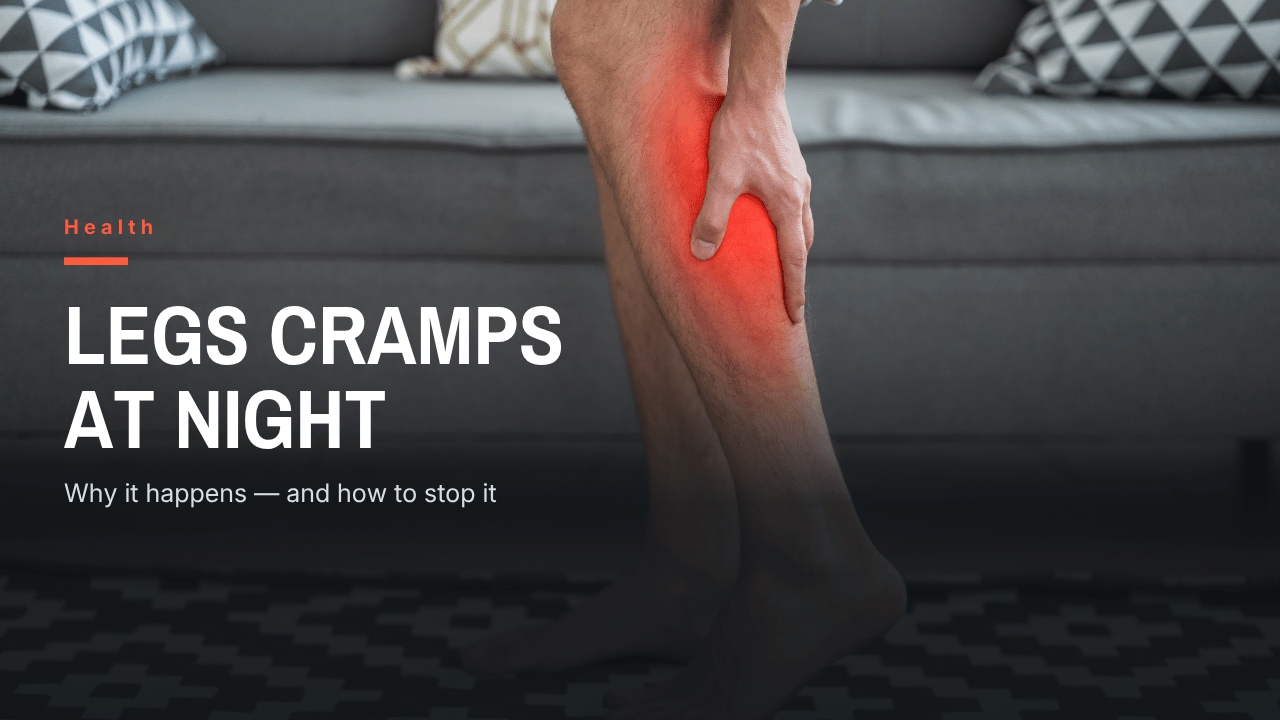
You are fast asleep, and suddenly a calf muscle tightens into a hard, painful knot that jolts you awake. Nighttime leg cramps are common, affecting many adults at some point, and become more frequent with age. They are usually harmless, but they can badly disrupt sleep and sometimes point to an underlying problem.
This article explains what leg cramps are, why they happen at night, how to stop one quickly, how to prevent them, and when to see a doctor.
What Are Nocturnal Leg Cramps?
A nocturnal leg cramp is a sudden, involuntary tightening of a muscle, most often in the calf, but also in the foot or thigh. It can last from a few seconds to several minutes. The muscle may feel hard to the touch, and soreness can linger for hours or until the next day.
They are different from restless legs syndrome, which causes an urge to move the legs and an uncomfortable crawling sensation rather than a sudden painful spasm.
Why Do They Happen at Night?
The exact cause is often unknown, which is why doctors call many cases idiopathic. Several factors are thought to contribute:
- Muscle fatigue or overuse: a long day of standing, walking, or exercise can make muscles more likely to cramp later.
- Prolonged sitting or standing: sitting for hours, or standing on hard floors, can shorten and tire the calf muscles.
- Foot position in bed: lying with toes pointed down shortens the calf muscle, which can trigger a cramp.
- Dehydration: not drinking enough fluids, especially after sweating or in hot weather.
- Electrolyte imbalance: low levels of potassium, calcium, or magnesium may play a role in some people, although research is mixed.
- Age: muscles and tendons tighten and lose mass over time, so cramps become more common after about 50.
- Pregnancy: leg cramps are very common in the second and third trimesters.
- Poor footwear: shoes that lack support or high heels worn often can strain the calves.
Medical Conditions and Medicines Linked to Cramps:
Frequent or severe cramps can sometimes be tied to another condition or a medicine:
- Conditions: diabetes, peripheral artery disease (poor circulation), nerve compression in the spine, thyroid problems, kidney disease, liver disease, and some neurological conditions.
- Alcohol use: heavy drinking can damage nerves and upset fluid and mineral balance.
- Medicines: diuretics (water pills), statins, some blood pressure drugs, asthma medicines, and others can increase the risk. Never stop a prescribed medicine without talking to your doctor.
How to Stop a Cramp Right Now:
- Stretch the muscle:For a calf cramp, straighten your leg and gently pull your toes and foot up toward your shin, holding for 30 seconds or more.
- Stand up and walk: Putting weight on the leg and walking around often releases the spasm.
- Massage the muscle: Gently rub the tight area with your hands.
- Apply heat: A warm towel, heating pad, or warm bath relaxes the muscle. Use a moderate temperature to avoid burns.
- Be gentle afterward: If the muscle stays sore, a cold pack for a few minutes and light movement can help.
How to Prevent Night Cramps:
Stretch before bed:
Spend a few minutes on calf and hamstring stretches. For example, stand an arm’s length from a wall, place your hands on it, step one foot back with the heel flat on the floor, and lean forward until you feel a stretch in the calf. Hold for 20 to 30 seconds and repeat on each leg a few times.
Stay active during the day:
Regular walking, cycling, or light exercise keeps muscles flexible. Avoid very intense exercise late in the evening if it seems to trigger cramps.
Drink enough fluids:
Sip water throughout the day, particularly in hot weather or after exercise. You do not need to force large amounts right before bed.
Eat a balanced diet:
Foods rich in potassium, calcium, and magnesium, such as bananas, yogurt, leafy greens, beans, nuts, and whole grains, support normal muscle function.
Adjust how you sleep:
- Loosen tightly tucked blankets that push your toes downward.
- If you sleep on your back, keep the feet relaxed or slightly raised.
- If you sleep on your stomach, let your feet hang over the edge of the mattress so the toes are not pointed down.
Wear supportive footwear:
Choose comfortable, supportive shoes, and avoid long hours in high heels or walking barefoot on hard floors.
Limit alcohol and caffeine:
Both can affect hydration and sleep, and may make cramps more likely in some people.
What About Supplements and Medicines?
Many people try magnesium, potassium, or calcium supplements, but studies show limited or inconsistent benefit for most people, and too much of a mineral can be harmful, especially if you have kidney disease or take certain medicines. Quinine was once used for leg cramps, but health authorities, including the US FDA, warn against it because it can cause serious side effects. Speak to a doctor or pharmacist before starting any supplement or medicine for cramps.
When to See a Doctor:
Most leg cramps are harmless, but see a healthcare provider if:
- Cramps are frequent, very painful, or regularly disturb your sleep
- They began after you started a new medicine
- You also have muscle weakness, numbness, or tingling
- The leg is swollen, red, warm, or tender, which may be a sign of a blood clot
- You have diabetes, kidney, liver, or thyroid disease, or leg pain when walking
- Cramps do not improve with home care
Seek urgent medical care if one leg suddenly swells and becomes painful, or if you have leg pain together with chest pain or shortness of breath.
The Bottom Line:
Night leg cramps are usually caused by tired or tight muscles, dehydration, age, pregnancy, or medicines, and often no clear cause is found. Gentle stretching, staying active, drinking enough water, and a few small changes to how you sleep prevent many cramps. If they are frequent, severe, or come with other symptoms, a doctor can check for an underlying cause.
Frequently Asked Questions
How do I stop leg cramps at night?
When a cramp wakes you up, gently stretch or massage the tight muscle. If you can stand safely, putting weight on the affected leg may also help. For recurring cramps, regular calf stretches, including a stretch before bed, may reduce how often they happen.
What deficiencies cause leg cramps at night?
Low blood levels of magnesium, potassium, or calcium can contribute to muscle cramps. Most nighttime leg cramps have no clear cause, so cramps alone give you little reason to suspect a deficiency. If they happen often, a healthcare provider can assess whether testing makes sense.
What diseases start with leg cramps?
Nighttime leg cramps can occur with kidney failure, nerve damage from diabetes, or circulation problems. A cramp by itself gives little information about whether you have an underlying condition. Speak with a healthcare provider if cramps keep disrupting your sleep or occur alongside weakness or numbness.
What can I drink before bed to prevent leg cramps?
Water is a good choice if you are thirsty. Evidence for a specific bedtime drink to prevent nighttime leg cramps is lacking. If you have been sweating heavily or exercising, drink water throughout the day instead of waiting until bedtime.
What vitamin stops leg cramps at night?
Evidence that any vitamin reliably stops nighttime leg cramps is lacking. A few small studies suggest B vitamins may help some people, but the evidence is limited. If you suspect a deficiency, talk with a healthcare provider before starting a supplement.
What is the fastest way to stop leg cramps?
For a calf cramp, start with a gentle stretch. Sit up, straighten your knee, and slowly pull your toes toward your shin until you feel your calf stretch. Hold the stretch until the muscle starts to relax.
Sources
- NHS · Leg cramps
- Cleveland Clinic · Leg cramps at night
- Mayo Clinic · Causes of night leg cramps
- Merck Manual · Conditions that can contribute to muscle cramps
- American Family Physician · Nocturnal leg cramps
- American Family Physician · Treatments for nocturnal leg cramps