
Benefits of Green Tea: What Science Says About a Daily Cup

The benefits of green tea include a refreshing way to stay hydrated, a mild caffeine boost, and naturally occurring plant compounds called polyphenols. Research also suggests possible improvements in some heart-health measures, although the effects are generally modest and results vary.
For someone replacing a sugary afternoon drink, green tea can be a useful everyday choice. For someone expecting rapid weight loss or protection against serious disease, the evidence offers a more cautious picture.
Understanding what green tea can reasonably do makes it easier to enjoy it without chasing unrealistic promises. Here is what the research suggests, how much to drink, and which precautions matter.
What Is Green Tea?
Green tea comes from the leaves of the Camellia sinensis plant, which also produces black and oolong tea. The difference lies mainly in how the leaves are processed.
Green tea leaves are heated soon after harvesting to limit oxidation. This helps preserve compounds called catechins, including epigallocatechin gallate, commonly shortened to EGCG.
A cup also contains caffeine and the amino acid L-theanine. Their amounts depend on the tea variety, serving size, amount of leaf used, and preparation method.
One distinction matters throughout the research: brewed green tea, matcha, and concentrated green tea extracts are different products. Findings from a supplement trial cannot automatically be applied to an ordinary cup of tea.
Five Potential Benefits of Green Tea
1. It Provides Plant Compounds With Antioxidant Activity
Green tea contains catechins that have antioxidant activity. Researchers study these compounds because they can influence processes involved in oxidative stress and inflammation.
However, finding an antioxidant effect in a laboratory does not establish that drinking tea will prevent a particular illness. Human health outcomes depend on many factors, including diet, sleep, physical activity, and existing medical conditions.
A useful approach is to include green tea alongside a variety of plant foods. Vegetables, fruit, beans, nuts, and whole grains contribute nutrients that tea cannot supply.
For ideas that fit this broader eating pattern, explore our guide to anti-inflammatory foods.
2. It May Help You Feel More Alert
Green tea contains caffeine, which can temporarily increase alertness. Some people find it a comfortable alternative to stronger caffeinated drinks.
Researchers have also investigated whether L-theanine, alone or combined with caffeine, affects attention and mood. A 2025 systematic review found potential benefits for certain attention tasks, but many studies used isolated compounds or controlled doses.
That means an everyday cup may not produce the same effects as a research supplement.
Your response matters, too. If green tea leaves you feeling shaky, anxious, or uncomfortable, a smaller serving, weaker brew, or decaffeinated option may suit you better.
3. It May Modestly Improve Cholesterol Levels
Some research suggests that green tea products can produce small reductions in total cholesterol and LDL cholesterol.
For example, a 2020 review of 31 randomized trials found modest average reductions in these measures. However, the studies used different products and doses, and many examined extracts rather than ordinary brewed tea.
These findings support further research, but they do not establish that a daily cup will prevent heart attacks or replace cholesterol treatment.
If improving cholesterol is your goal, prioritize the habits with a broader role in your care plan. Our guide to natural ways to lower cholesterol covers practical changes involving fiber, healthy fats, and physical activity.
Keep taking prescribed medication unless your healthcare professional advises a change.
4. Unsweetened Green Tea Can Replace Sugary Drinks
One practical benefit of green tea is straightforward: plain brewed tea contains very few calories and no added sugar.
Replacing a regularly consumed sugary drink with unsweetened green tea can reduce the sugar and calories coming from beverages. This benefit comes from the swap itself.
What you add to the cup changes the result. Bottled sweetened tea, syrup-heavy matcha drinks, and drinks with generous amounts of honey can contain substantial added sugar.
Check the label on packaged products. At home, try adjusting the strength or adding a little lemon or fresh mint before assuming the drink needs sweetening.
5. It Contributes to Your Daily Fluid Intake
Green tea counts toward your fluid intake. Moderate amounts of caffeinated tea can help you stay hydrated despite caffeine’s mild diuretic effect.
This can be useful if you enjoy having different drinks throughout the day. A warm cup in the morning or unsweetened iced green tea in the afternoon can add variety.
Water remains a convenient everyday choice, and you do not need to replace it with tea to obtain health benefits. Choose a mixture of drinks that suits your needs, preferences, and caffeine tolerance.
Does Green Tea Help With Weight Loss?
Green tea is often marketed for fat burning, but the weight-loss evidence is mixed.
A 2024 review of randomized trials suggested that drinking green tea might produce a small reduction in body weight. However, the certainty of the evidence was low or very low. Earlier reviews of green tea preparations also found effects too small or inconsistent to support strong weight-loss promises.
There are several reasons to interpret the findings carefully:
- Studies use different teas, extracts, doses, and treatment periods.
- Some products combine green tea with other ingredients.
- Results from concentrated supplements may not apply to brewed tea.
- Small short-term changes do not establish lasting weight loss.
Green tea also cannot choose where your body loses fat. Drinking it before breakfast or adding lemon does not make it specifically burn belly fat.
For weight management, its most useful role may be replacing a higher-calorie drink within an eating pattern you can maintain. A heart-healthy diet offers a broader foundation for planning balanced meals.
Which Green Tea Claims Need More Caution?
You may see green tea described as preventing cancer, controlling diabetes, improving memory, or dramatically slowing aging. These claims need careful interpretation.
Some observational studies find associations between tea drinking and better health outcomes. However, tea drinkers may differ from other people in their food choices, activity levels, smoking habits, or access to healthcare.
Laboratory findings also do not always translate into meaningful benefits in people.
The NIH’s National Center for Complementary and Integrative Health explains that definite conclusions remain difficult for many promoted uses. Cancer findings have been inconsistent, and much of the cholesterol research involves supplements.
Green tea can be part of an enjoyable routine. It should not be used to treat cancer, replace diabetes care, or substitute for prescribed treatment.
How Much Green Tea Should You Drink a Day?
There is no proven ideal number of cups for everyone.
If you are new to green tea, start with one cup and notice how it affects your stomach, sleep, and concentration. You do not need to increase your intake simply because a study involved several cups a day.
Consider your total caffeine intake from coffee, tea, energy drinks, chocolate, supplements, and some medicines.
The FDA’s caffeine guidance identifies 400 milligrams a day as an amount not generally associated with negative effects for most adults. This is not a daily target, and some people experience symptoms at much lower amounts.
The caffeine in a cup varies with its size, strength, and preparation. Decaffeinated green tea generally contains less caffeine, but it is not necessarily completely caffeine-free.
When Is the Best Time to Drink Green Tea?
The best time is one that fits your routine without causing discomfort or interfering with sleep.
Morning or early afternoon may suit people who enjoy its caffeine. If drinking it on an empty stomach makes you nauseated, try a smaller or weaker cup with a little food.
If you have low iron, the advice may be different: tea can interfere with iron absorption. Discuss timing around meals and iron supplements with your healthcare professional or pharmacist.
Move caffeinated tea earlier in the day if you notice difficulty falling asleep. Even a drink that feels mild can affect someone who is sensitive to caffeine.
If you regularly wake up tired or struggle to concentrate, our guide to lack of sleep symptoms explains patterns worth noticing.
Brewed Green Tea, Matcha, and Extracts: What Is the Difference?
| Product | How it is consumed | What to consider |
|---|---|---|
| Brewed green tea | Leaves or a tea bag are steeped in water, then removed | Strength and caffeine vary with preparation |
| Matcha | Powdered tea leaf is mixed into water or another drink | Caffeine and plant-compound intake depend on how much powder is used |
| Green tea extract | Concentrated ingredients are taken in capsules, tablets, or other supplements | Higher concentrations can carry different risks and interact with medicines |
Matcha does not automatically provide better health outcomes than brewed tea. Sweetened matcha drinks also differ nutritionally from plain matcha mixed with water.
Concentrated extracts deserve particular caution. Their safety cannot be judged simply by how commonly people drink green tea.
Green Tea Side Effects and Who Should Be Careful
Brewed green tea is generally well tolerated by adults, but your health conditions, medicines, and caffeine sensitivity still matter.
Caffeine Sensitivity
Possible symptoms include difficulty sleeping, anxiety, shakiness, nausea, or a racing heartbeat.
Reduce your intake if symptoms appear, and speak with a healthcare professional if they persist. Include other caffeine sources when reviewing your intake.
Pregnancy and Breastfeeding
During pregnancy, NHS guidance advises no more than 200 milligrams of caffeine a day from all sources.
Ask your midwife or clinician how tea fits your individual situation. During breastfeeding, review caffeine intake if your baby appears unusually unsettled or has sleep difficulties.
Medicines and Iron Supplements
Green tea can interact with some medicines. Reported interactions involve drugs such as nadolol, while concentrated extracts can affect medicines including atorvastatin.
If you take regular medication or iron supplements, ask a pharmacist before substantially increasing your intake or starting an extract.
Liver Risks From Concentrated Extracts
Uncommon cases of liver injury have been reported with green tea products, primarily concentrated extracts in capsules or tablets.
Avoid assuming that a high-dose supplement will provide more benefits than a beverage. Discuss these products with your clinician, particularly if you have liver disease or take other medicines.
How to Make Green Tea Taste Better
An unpleasantly bitter cup can make a healthy habit difficult to maintain. Before adding sugar, try changing how you brew it.
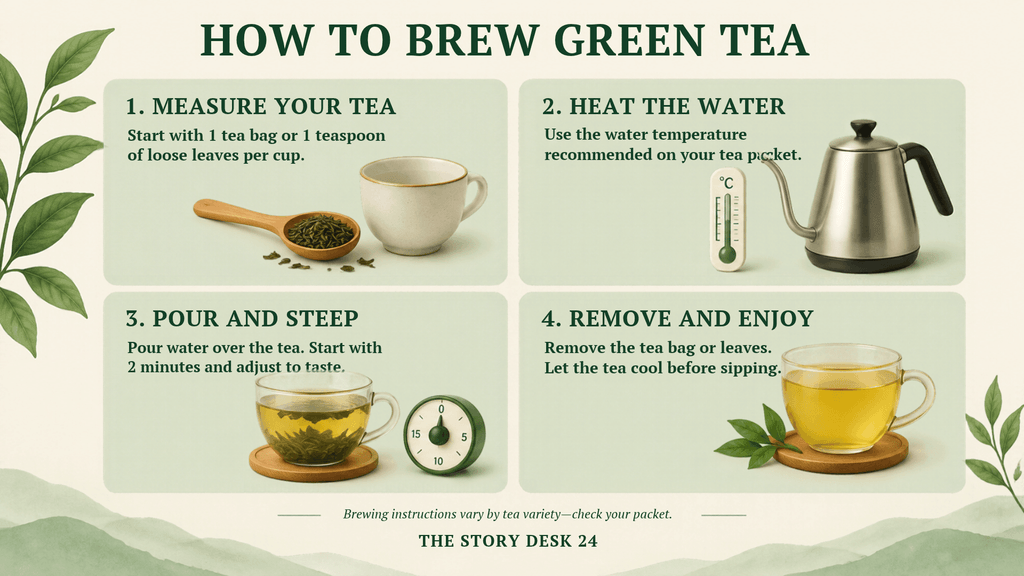
- Follow the packet instructions. Different varieties need different brewing conditions.
- Use water below a vigorous boil when recommended. Very hot water can make some green teas taste harsh.
- Start with a short steep. Around two minutes is a useful tasting point; adjust to the tea and your preference.
- Remove the leaves or tea bag. Leaving them in can increase bitterness.
- Experiment with simple additions. Fresh mint or a little lemon can change the flavor.
For a morning routine, pair your cup with one of these healthy breakfast ideas, such as oatmeal, eggs with whole-grain toast, or plain yogurt with fruit.
Frequently Asked Questions
What happens if I drink green tea daily?
Drinking brewed green tea daily adds plant compounds to your diet and may provide a mild caffeine boost. Unsweetened tea can fit a balanced routine, but benefits vary and drinking more does not guarantee better results. Adjust your intake to your caffeine tolerance, sleep, health conditions, and medicines.
What is the best time to drink green tea?
There is no single proven best time. Morning or early afternoon often suits people who enjoy its caffeine. Move your last cup earlier if it disrupts sleep. The best routine is one that fits your day without causing stomach discomfort or interfering with rest.
Can green tea burn belly fat?
Green tea does not specifically target belly fat. Research suggests any direct weight-loss effect is small and uncertain. Unsweetened green tea may support weight management when it replaces sugary drinks, alongside balanced meals, regular physical activity, and adequate sleep.
Can I drink green tea on an empty stomach?
Some people tolerate it, while others experience nausea or stomach discomfort. If this happens, try a smaller serving, a weaker brew, or drinking it after food. If you take iron supplements, ask a pharmacist about timing because tea can interfere with iron absorption.
What are the side effects of green tea?
Its caffeine can cause poor sleep, anxiety, shakiness, nausea, or palpitations, particularly in sensitive people. Concentrated green tea extracts carry additional risks, including uncommon liver injury. Ask a healthcare professional about suitable intake if you are pregnant, breastfeeding, or taking regular medication.
Sources
- NIH / NCCIH · Green tea: usefulness and safety
- FDA · How much caffeine is too much?
- Nutrition Journal · Green tea and cholesterol levels: research review
- Nutrition Reviews · Tea, L-theanine and caffeine: effects on attention and mood
- British Journal of Nutrition · Tea, coffee and body weight: research review
- NHS · Water, drinks and hydration
- NHS · Caffeine guidance during pregnancy